
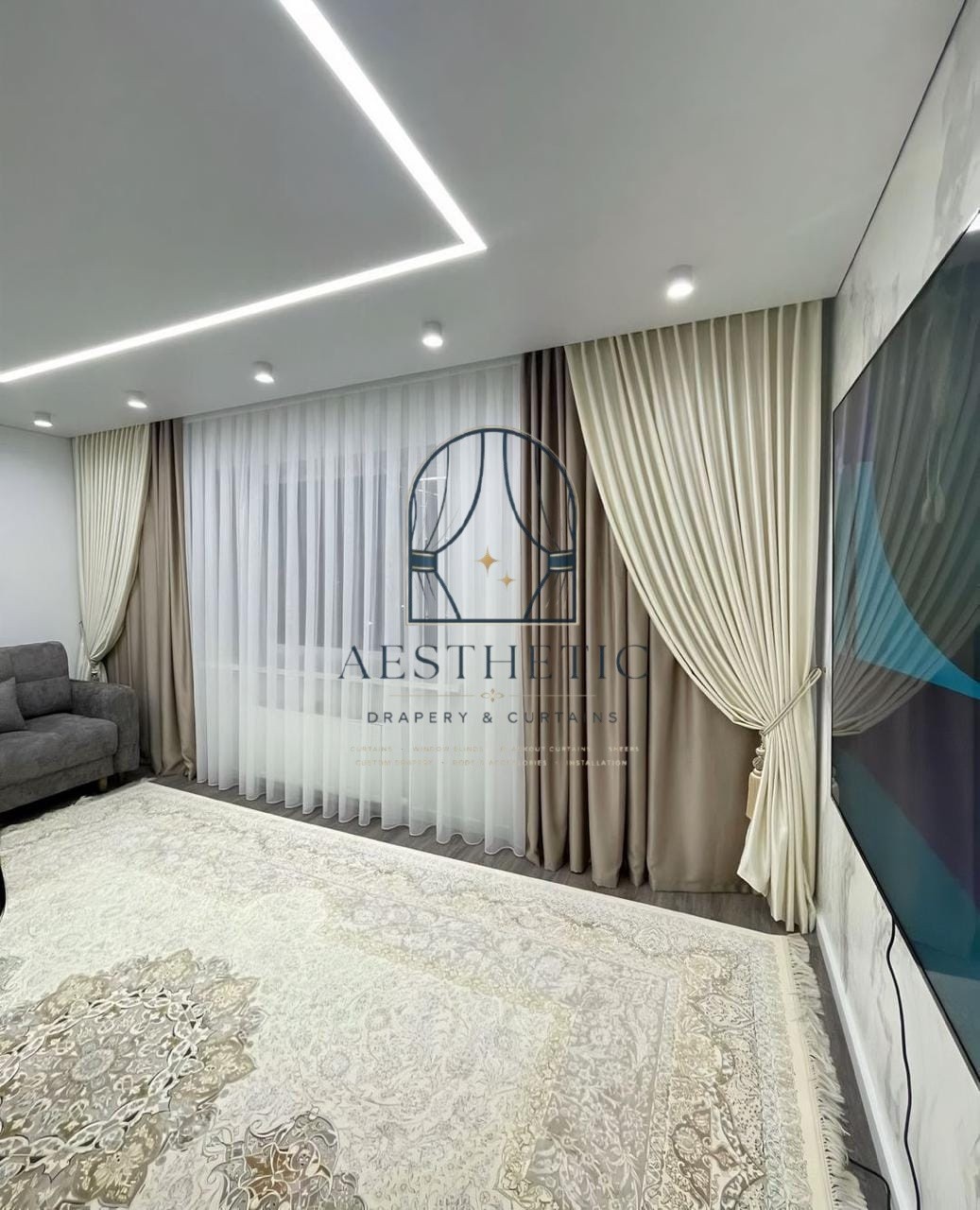
One of the first questions homeowners ask when planning new window treatments is: How much do custom curtains cost?
Whether you are furnishing a newly completed house, renovating your living room, upgrading bedroom curtains or preparing a commercial property, understanding curtain costs can help you plan your budget more effectively.
Unlike ready-made curtains, custom curtains are designed to suit specific window dimensions, fabric preferences, heading styles and interior requirements. This flexibility allows you to achieve a more coordinated finish, but the final price depends on several factors.
Two customers with windows of similar sizes may receive different quotations because they select different fabrics, curtain headings, lining options, accessories and installation arrangements.
In Kenya, where homeowners have access to different curtain fabrics and window treatment designs, comparing the details included in a quotation is just as important as comparing the final amount.
At Aesthetics Drapery and Curtains, we help homeowners and businesses explore curtain solutions that balance appearance, functionality and budget.
1. What Determines Custom Curtain Prices?
There is no single price that applies to every custom curtain project. The final quotation is influenced by the materials, measurements, construction and services required.
Here are the main factors to consider before ordering.
2. Curtain Fabric Selection
Fabric is one of the biggest factors influencing the cost of custom curtains.
Different materials have different textures, weights, finishes, durability and light-control properties. Some fabrics are designed primarily for decoration, while others offer additional benefits such as improved privacy or light reduction.
Common curtain fabric options include:
Sheer Fabrics
Sheer curtains are lightweight materials that allow natural light to enter while softening the appearance of a window.
They are popular in living rooms, bedrooms and spaces where homeowners want a bright, airy atmosphere.
The final cost depends on the selected fabric quality, width, quantity and finishing requirements.
Blackout Fabrics
Blackout curtains are designed to reduce the amount of outside light entering a room.
They are particularly useful in bedrooms, media rooms and spaces where greater darkness is preferred.
Some blackout curtains use specialised fabric, while others achieve their light-blocking properties through additional lining. The construction method can influence the overall quotation.
Decorative and Textured Fabrics
Decorative curtain fabrics include textured, patterned, embroidered and other distinctive materials.
These options can help create a more personalised interior, but their cost varies according to material quality, design, finish and availability.
Why Fabric Quality Matters
When comparing quotations, do not consider fabric price alone.
Think about how the material will hang, how frequently the curtains will be used, how easily they can be maintained and whether the fabric suits the room.
Choosing the right fabric helps ensure that your curtains remain attractive and functional over time.
3. Window Measurements and Curtain Size
The dimensions of your windows directly influence how much fabric is required.
Custom curtains are normally made according to the width and height of the intended installation area.
However, the amount of fabric needed is not necessarily equal to the width of the window.
Curtains require additional material to create attractive folds and fullness.
For example, a curtain designed to cover a wide window may require considerably more fabric than a flat panel measuring exactly the same width as the opening.
Important Measurements
When planning custom curtains, consider:
- Window width.
- Desired curtain height.
- Curtain track or pole width.
- Installation height above the window.
- Floor clearance for full-length curtains.
- Additional width required for fabric fullness.
Accurate measurements help prevent problems such as curtains that appear too narrow, hang unevenly or fail to cover the intended area.
For larger windows, sliding doors and floor-to-ceiling openings, professional measurement is particularly useful.
4. Curtain Fullness and Fabric Quantity
Curtain fullness refers to how much fabric is used in relation to the width of the curtain track or pole.
It determines how rich, gathered or flowing the finished curtains appear.
A curtain made with minimal fabric may look relatively flat, while one with greater fullness creates more pronounced folds.
The required fabric quantity depends on:
- Window or track width.
- Selected heading style.
- Desired appearance.
- Fabric characteristics.
- Manufacturer or fabric specifications.
For example, wave curtains, pencil pleats and pinch pleats have different construction requirements.
If you want deep, decorative folds, additional fabric may be necessary. This can increase the overall material and tailoring costs.
It is therefore important to discuss the desired appearance before the fabric quantity is calculated.
5. Curtain Heading Style
The heading is the finished upper section of a curtain that connects it to the supporting rod or track.
Different headings require different construction methods and hardware arrangements.
Popular options include:
Eyelet Curtains
Eyelet curtains feature reinforced circular openings through which a compatible curtain pole passes.
They create broad, regular folds and a contemporary appearance.
Pinch Pleat Curtains
Pinch pleats have permanently stitched groups of folds that produce a structured and tailored finish.
They can be suitable for formal living rooms, bedrooms and elegant interiors.
Pencil Pleat Curtains
Pencil pleat curtains use gathering tape to create narrow, closely spaced folds.
They offer flexibility and can work with suitable curtain tracks and poles.
Wave Curtains
Wave curtains create smooth, continuous folds using specialised heading tape, gliders and compatible tracks.
They are particularly popular in contemporary interiors.
The heading you select can affect fabric fullness, sewing requirements and hardware costs. Discuss these details when requesting a quotation.
6. Curtain Lining and Light-Control Requirements
Curtain lining is another factor that can influence the overall cost.
A lining is an additional material fitted behind the main curtain fabric. Depending on the selected type, it can change how the curtain looks, hangs and performs.
Common options include:
Standard lining: Adds an additional layer behind the main fabric and can help create a fuller appearance.
Blackout lining: Designed to reduce light passing through the curtain.
Thermal lining: Selected to provide an additional layer between the room and the window, potentially helping with heat retention or reducing heat transfer.
Not every curtain requires lining. Lightweight decorative curtains and sheers may be designed without it.
The best option depends on the room, the fabric and the level of privacy or light control required.
7. Curtain Rods, Tracks and Accessories
A complete curtain project may involve more than the curtain fabric and tailoring.
The supporting hardware contributes to the appearance, operation and durability of the finished window treatment.
Possible accessories include:
- Curtain rods and poles.
- Curtain tracks.
- Brackets and mounting supports.
- Curtain rings and hooks.
- Finials and decorative ends.
- Tiebacks and holdbacks.
- Wave gliders and specialised track components.
Some headings require specific hardware, so it is important to confirm compatibility before placing an order.
For example, eyelet curtains require a suitable pole, while wave curtains need a compatible track and glider system.
The quantity, material, design and specifications of the selected accessories all influence the final project cost.
8. Tailoring and Curtain Finishing
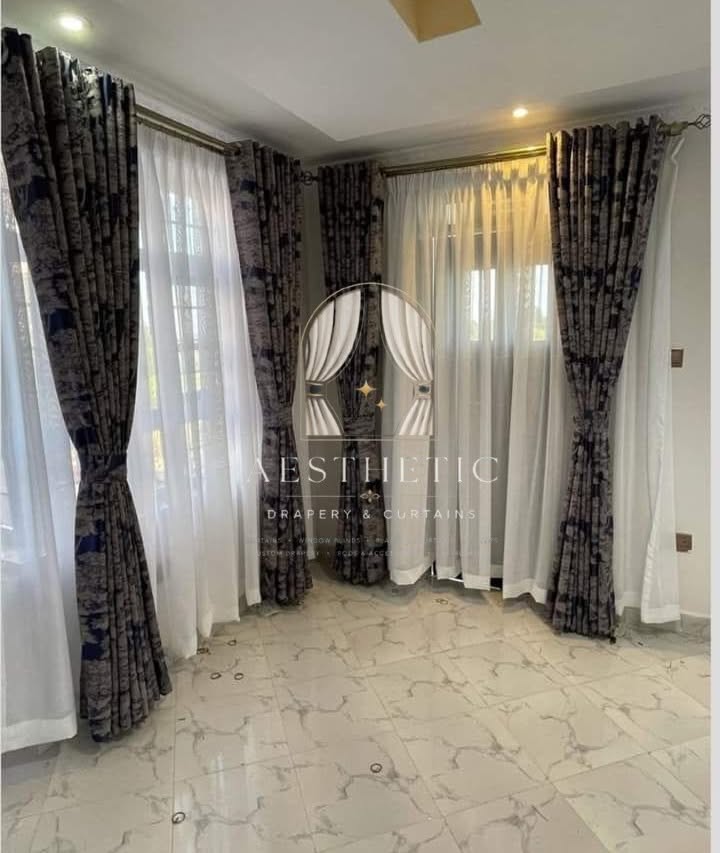
Custom curtains require more than cutting fabric to the correct dimensions.
The material must be measured, cut, stitched and finished according to the selected design.
Tailoring requirements can include:
- Preparing the curtain heading.
- Sewing the sides and bottom hems.
- Attaching lining.
- Creating pleats or wave arrangements.
- Adding hooks, rings or other fittings.
- Ensuring both curtain panels have consistent lengths.
More detailed designs may require additional construction work.
This is why two curtain projects using similar fabrics can have different tailoring quotations.
When comparing prices, ask whether the quotation includes the complete curtain construction or only the fabric supply.
9. Curtain Installation and Labour Costs
Installation is another consideration when budgeting for custom curtains.
Some customers already have suitable curtain rods or tracks and only require the curtains to be made.
Others need a complete service involving measurements, hardware supply, mounting and final fitting.
Installation requirements may depend on:
- Number of windows.
- Window dimensions.
- Wall or ceiling mounting arrangements.
- Type of curtain track or pole.
- Accessibility of the installation area.
- Whether existing hardware needs to be removed or replaced.
Large windows, high ceilings and specialised track systems may require additional planning and labour.
Confirm whether installation is included in your quotation so that you can calculate the complete project budget.
10. Motorised Curtains and Specialised Window Treatments
For homeowners and businesses looking for additional convenience, motorised curtains may be worth considering.
Motorised systems allow curtains to open and close using an electric mechanism rather than manual operation.
They can be useful in:
- Large living room windows.
- Floor-to-ceiling glass installations.
- Hotels and hospitality spaces.
- Offices and boardrooms.
- Hard-to-reach windows.
- Modern homes with integrated automation requirements.
The cost of a motorised curtain installation depends on the motor, track system, curtain dimensions, electrical requirements, controls and installation complexity.
Motorisation is an additional feature rather than a requirement for every curtain project.
If you are considering it, discuss the available system specifications and compatibility before making a final decision.
11. How to Plan Your Curtain Budget
A practical way to manage your curtain budget is to identify the requirements for each room before requesting quotations.
Start by listing the windows that need curtains and decide which rooms require particular features.
For example:
| Room | Possible curtain requirements |
|---|---|
| Living room | Decorative curtains with sheers |
| Master bedroom | Blackout curtains or lined curtains |
| Children’s bedroom | Privacy and light-control curtains |
| Dining room | Decorative curtains that complement the furniture |
| Home office | Curtains or blinds with suitable light control |
| Large glass doors | Wide curtains or compatible wave systems |
Once you have identified the requirements, consider the following steps.
Step 1: Measure Your Windows
Record the width and height of each window, including the intended curtain installation area.
Where possible, arrange professional measurements before fabric is ordered.
Step 2: Choose Your Fabric
Select fabrics according to the room’s purpose, preferred appearance and budget.
You do not necessarily need the same fabric throughout the entire property.
Step 3: Select the Heading
Decide whether you prefer eyelet, pinch pleat, pencil pleat or wave curtains.
Remember that the heading affects the fabric quantity and supporting hardware.
Step 4: Decide on Lining and Accessories
Determine whether you need blackout lining, decorative rods, tracks, tiebacks or motorised operation.
Step 5: Request a Detailed Quotation
Ask for a quotation that clearly explains the materials, quantities, tailoring, accessories and installation services included.
This makes it easier to compare different options and understand what you are paying for.
12. How to Compare Custom Curtain Quotations
When comparing curtain quotations, avoid making your decision based on the final price alone.
Two quotations may look similar but include different materials, services and finishing standards.
Check whether each quotation specifies:
- The selected curtain fabric and its specifications.
- The required fabric quantity.
- The heading and fullness.
- Whether lining is included.
- The curtain rods or tracks required.
- Tailoring and finishing.
- Installation and labour.
- Any additional transport or delivery charges.
A detailed quotation helps you understand the actual value of the proposed window treatment.
It also makes it easier to adjust your selections if you need to work within a particular budget.
13. Where to Get Custom Curtains in Nairobi, Kenya
Finding suitable custom curtains involves selecting the right combination of fabric, heading, measurements and hardware.
At Aesthetics Drapery and Curtains, we provide window treatment solutions for homeowners, property developers, offices and commercial spaces.
Whether you are furnishing a single bedroom, renovating an entire home or planning curtains for a hospitality property, we can help you explore options suited to your requirements.
Our services include:
- Custom-made curtains.
- Sheer curtains.
- Blackout curtains.
- Window blinds.
- Curtain rods, tracks and accessories.
- Motorised curtains and blinds.
- Curtain measurement and installation.
We serve customers in Nairobi and across Kenya, with solutions extending to other East African markets.
Visit our showroom to explore available options and discuss your curtain requirements.
Showroom: New Garissa Lodge, Shop G44, Eastleigh, Nairobi, Kenya.
Call: +254 720 251 109 / +254 720 977 717
WhatsApp: +254 720 251 109
Aesthetics Drapery and Curtains – Designed for Space. Made to Inspire.
Custom curtain prices in Kenya vary depending on fabric quality, window measurements, fabric fullness, heading style, lining, accessories, tailoring and installation. The most reliable way to establish the cost is to request a quotation based on your actual window dimensions and preferred design.
Fabric selection and the quantity required are major factors. However, the heading style, lining, hardware and installation requirements can also significantly influence the final quotation.
Custom curtains may require a higher initial investment because they are made to suit specific window measurements and design preferences. However, they offer greater flexibility in fabric selection, fullness, heading styles and overall fit.
Not necessarily. Some quotations cover fabric and tailoring only, while others include tracks, rods, accessories and professional installation. Always confirm exactly what is included before placing your order.
Yes. You can manage your budget by selecting suitable fabrics, prioritising the features needed in each room and choosing practical headings and accessories. Requesting a detailed quotation also helps you identify where adjustments can be made without sacrificing the overall appearance and functionality.
@aesthetic_curtains26
Instagram Profile
Aesthetic Drapery and Curtains
Facebook Page
Visit Our Showroom
Aesthetics Drapery and Curtains
New Garissa Lodge, Shop G44
Eastleigh, Nairobi, Kenya
Call: +254 720 251 109 | +254 720 977 717
WhatsApp: +254 720 251 109