
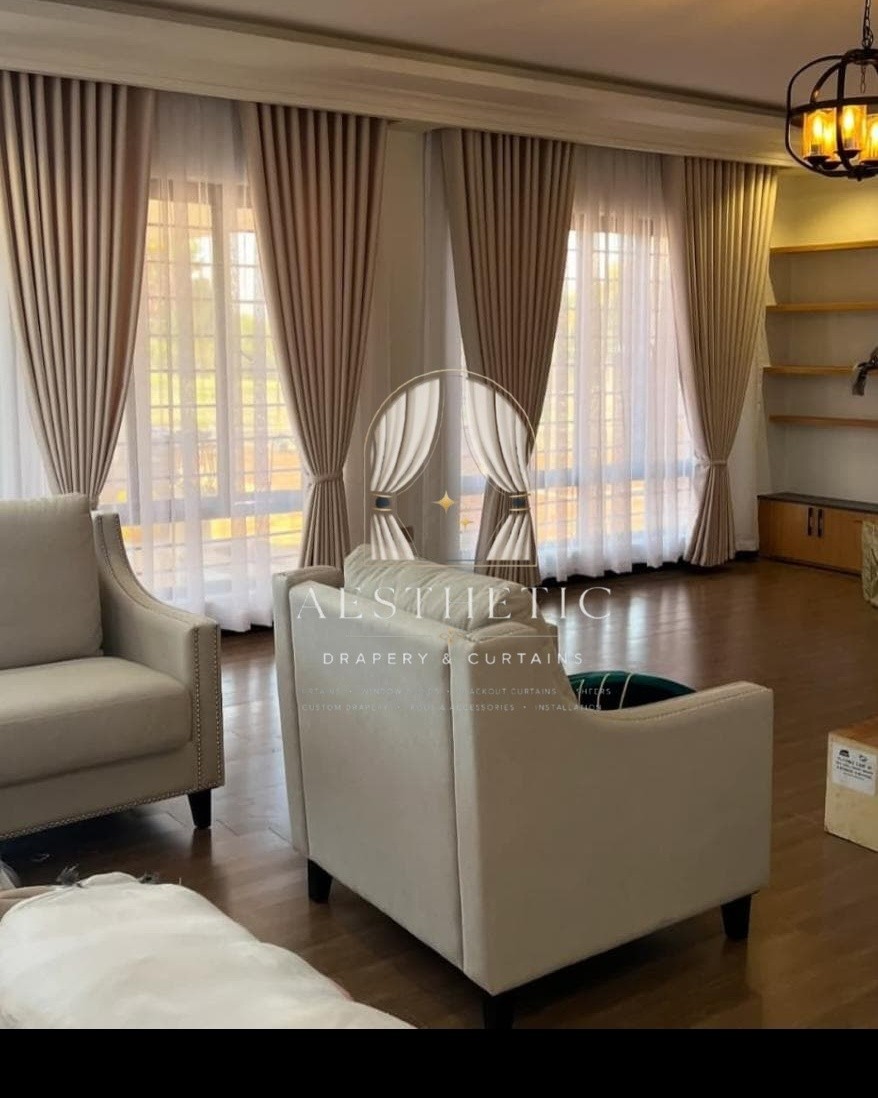
Open-plan living has become a popular approach to modern interior design. By combining spaces such as the living room, dining area and kitchen into one connected layout, homeowners can create interiors that feel more spacious, welcoming and flexible.
However, furnishing an open-plan home requires careful planning. Because different areas share the same visual environment, individual design choices can influence the appearance of the entire space.
Curtains are particularly important because they cover large sections of the walls and windows. Choosing different colours, fabrics or styles without considering the overall layout can make an open-plan interior feel disconnected.
The goal is not necessarily to use identical curtains everywhere. Instead, select window treatments that complement one another while allowing each area to maintain its own character.
At Aesthetics Drapery and Curtains, we help homeowners and businesses explore curtain designs, fabrics and window treatment solutions that bring different interior spaces together.
1. Why Curtains Matter in Open-Plan Living Spaces
In an open-plan layout, the living room, dining area and sometimes the kitchen share a connected environment.
This means that curtains selected for one window may influence the appearance of furniture and decorative elements in another part of the room.
Well-chosen curtains can help achieve several objectives.
Creating Visual Continuity
Using complementary curtain colours, fabrics and heading styles helps create a consistent appearance throughout the connected space.
For example, beige curtains in the living room can coordinate with cream or warm grey curtains near the dining area.
Defining Different Areas
Although open-plan layouts connect different spaces, each area still has its own purpose.
Curtains can help establish a consistent decorative theme while allowing the living and dining areas to retain their individual identities.
Managing Natural Light
Open-plan spaces may have windows facing different directions.
Some areas may receive direct sunlight, while others remain relatively shaded.
Choosing suitable curtain fabrics and light-control options helps accommodate these differences.
Improving Privacy
Large windows and glass doors can expose several areas of an open-plan home.
Curtains provide flexible privacy options without requiring permanent changes to the layout.
2. Should Curtains Match Throughout an Open-Plan Home?
One of the common questions when furnishing an open-plan interior is whether every curtain should have exactly the same colour and design.
The answer depends on the layout and the overall interior style.
Using identical curtains throughout can create a consistent appearance, especially where several windows are visible from one central position.
However, using complementary designs can also produce an attractive result.
Option One: Use the Same Curtain Fabric
Selecting the same fabric for all connected windows creates a uniform appearance.
This works particularly well where the living room and dining area share similar windows and wall finishes.
It can also simplify the design process because the same fabric and heading style can be used across the space.
Option Two: Use Complementary Colours
You can select different shades within the same colour family.
For example:
- Beige curtains in the living room.
- Cream curtains in the dining area.
- Warm off-white sheers across adjoining windows.
The shades remain connected without making every window look identical.
Option Three: Maintain the Same Heading Style
If you prefer different curtain colours, using the same heading style can help create visual consistency.
For example, wave curtains throughout the connected space can maintain a modern appearance even when individual fabrics vary.
The most important consideration is how all the window treatments look together.
3. Best Curtain Colours for Open-Plan Living Areas
Colour selection is particularly important in open-plan homes because the same colours may be visible from different parts of the interior.
Consider these options when planning your window treatments.
Beige and Cream Curtains
Beige and cream are versatile choices for open-plan spaces.
They complement many furniture finishes and can create a warm, welcoming appearance.
These shades work particularly well with:
- Wooden furniture.
- Neutral sofas.
- Cream wall finishes.
- Natural flooring.
- Warm decorative accessories.
Grey Curtains
Grey curtains can complement modern furniture and contemporary interior finishes.
Light grey creates a subtle appearance, while charcoal introduces stronger contrast.
Grey is particularly useful where the room already contains white, black or silver decorative elements.
White and Off-White Curtains
White and off-white curtains help maintain a bright and uncluttered appearance.
They can be suitable for open-plan homes with large windows and generous natural lighting.
They also work well as sheer curtain options when combined with heavier decorative curtains.
Earthy Curtain Colours
Olive green, terracotta and warm brown can introduce character into open-plan interiors.
These colours can complement natural materials, wooden furniture and neutral upholstery.
Use them carefully so that the overall space remains balanced.
4. Choosing Curtains for the Living Room Area
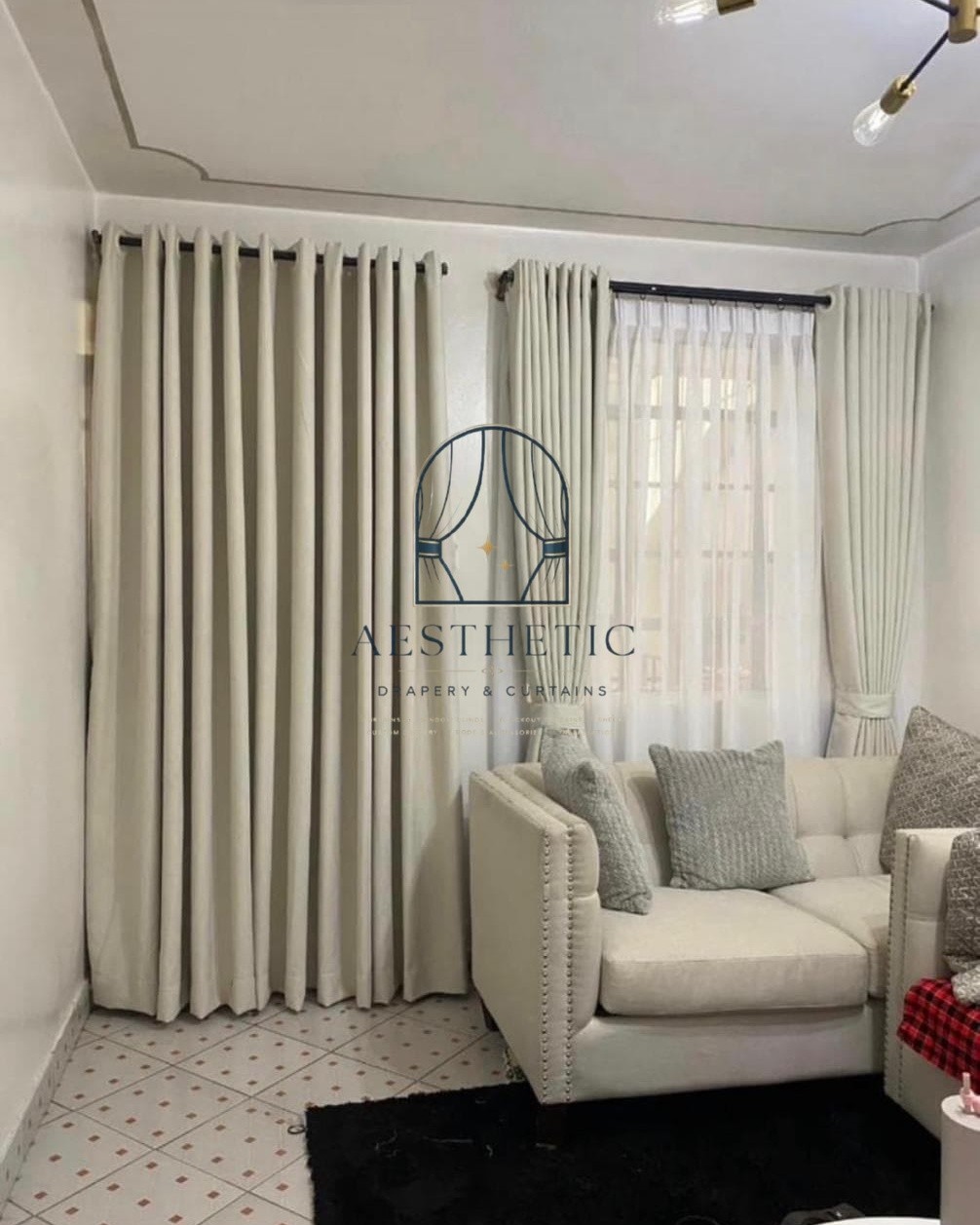
The living room is often the main visual focus of an open-plan home.
Its curtains should complement the sofa, television area, wall finishes, rugs and decorative accessories.
Consider the Main Furniture
Start by identifying the dominant colours in the living room.
If your sofa is grey, beige or cream, you have several curtain colour options.
If the furniture already features bold patterns or strong colours, consider simpler curtain fabrics to avoid visual competition.
Consider the Window Size
Large living room windows can accommodate full-length curtains that create a flowing appearance.
Wave, pinch pleat and eyelet headings are possible options, depending on the interior style and available hardware.
Consider Layered Curtains
Combining sheer curtains with heavier decorative curtains can provide flexibility.
Sheers can soften daylight, while the outer curtains can provide additional privacy and light reduction when needed.
This arrangement can also introduce texture and depth to the living room.
5. Choosing Curtains for the Dining Area
The dining area may be connected directly to the living room, but it serves a different purpose.
Its curtains should complement the overall interior while working with the dining table, chairs, lighting and wall finishes.
Keep the Colour Scheme Connected
If the living room features beige curtains, consider cream, warm grey or a complementary neutral shade for the dining area.
You do not need to use exactly the same fabric, but the colours should work together.
Consider Maintenance
Dining areas can be exposed to cooking smells, food splashes and general household activity, depending on their proximity to the kitchen.
Choose fabrics that suit the room’s use and maintenance requirements.
Avoid Overly Heavy Window Treatments Where Space Is Limited
If the dining area is relatively small, consider curtain designs that do not visually overwhelm the window.
The fabric, heading and fullness should be proportionate to the opening and available space.
6. Should Kitchen Curtains Match Living Room Curtains?
In open-plan homes where the kitchen is connected to the living room, window treatments should complement the wider interior.
However, the kitchen may require a different approach because of cooking activity, moisture and cleaning requirements.
For example, you could use:
- Simple, practical blinds in the kitchen.
- Decorative curtains in the living room.
- Complementary colours across both areas.
This allows the kitchen to remain functional while maintaining a coordinated interior.
If curtains are used near cooking areas, consider their distance from heat sources and appliances. Window treatments should never obstruct ventilation or create a fire hazard.
7. Best Curtain Heading Styles for Open-Plan Homes
The heading style influences how curtains fall and how they contribute to the overall appearance of an open-plan interior.
Consider the following options.
Wave Curtains
Wave curtains create smooth, evenly spaced folds.
Their streamlined appearance makes them suitable for modern interiors where a consistent window treatment style is desired.
They can work particularly well across large windows and sliding glass doors.
Eyelet Curtains
Eyelet curtains create broad folds using circular openings along the heading.
They can suit contemporary homes where decorative curtain poles are part of the design.
Pinch Pleat Curtains
Pinch pleat curtains provide a structured and tailored finish.
They are useful when a more formal or elegant appearance is desired.
Pencil Pleat Curtains
Pencil pleat curtains create closely spaced gathers and offer flexibility across different window sizes.
The final choice should consider the fabric, track or pole compatibility and overall interior design.
8. Using Sheer Curtains to Connect Open-Plan Spaces
Sheer curtains are particularly useful when you want to maintain a bright, open appearance.
Their lightweight fabric softens incoming daylight while adding a decorative layer to the windows.
In an open-plan home, sheers can help create consistency across different areas without making the interior feel heavy.
Benefits of Sheer Curtains
- Allow natural light to enter.
- Soften the appearance of large windows.
- Complement heavier decorative curtains.
- Create a light and airy atmosphere.
- Work with different interior colour schemes.
Layering Sheers and Decorative Curtains
A popular arrangement is to combine sheer curtains with heavier outer curtains.
The sheer layer can remain closed during the day, while the heavier curtains can be drawn when additional privacy or light reduction is required.
For a coordinated open-plan interior, consider using similar sheer fabrics across the connected areas.
9. Choosing Curtains for Large Windows and Sliding Glass Doors

Open-plan homes often include large windows, balcony entrances and sliding glass doors.
These openings require suitable curtain measurements and hardware to ensure that the window treatments do not interfere with movement.
Consider Full-Length Curtains
Floor-length curtains can create a continuous decorative effect and complement modern open-plan interiors.
The finished length should be planned carefully to provide suitable floor clearance.
Choose Appropriate Track Systems
Wide windows may require longer tracks and suitable supporting brackets.
For wave curtains, use compatible tracks and gliders designed to maintain the intended folds.
Plan Where the Curtains Will Stack
When curtains are opened, the gathered fabric occupies space at the sides of the window.
Ensure that the arrangement does not obstruct door handles, furniture or access routes.
For large glass openings, a centre-opening or one-way arrangement may be suitable depending on the available space.
10. Should You Use Curtains or Blinds in Open-Plan Spaces?
Both curtains and blinds can work well in open-plan homes.
The choice depends on the appearance you want, the room’s function and the level of light control required.
| Feature | Curtains | Blinds |
|---|---|---|
| Appearance | Soft and decorative | Structured and streamlined |
| Fabric options | Extensive fabric and texture choices | Depends on blind type |
| Light control | Depends on fabric and lining | Depends on blind design |
| Layering | Can combine sheers and heavier curtains | Can be paired with curtains |
| Interior style | Classic, elegant and contemporary | Minimalist and contemporary |
| Space requirements | Need stacking space when opened | Depends on the blind mechanism |
Some open-plan homes benefit from using both.
For example, decorative curtains can be used in the living room while blinds provide practical coverage in the kitchen.
The key is to maintain a coordinated colour palette and design approach.
11. Common Mistakes to Avoid When Choosing Open-Plan Curtains
Because open-plan areas share one visual environment, small design inconsistencies can become noticeable.
Avoid these common mistakes.
Using Too Many Different Colours
Introducing several unrelated curtain colours can make the interior feel disconnected.
Choose a coordinated colour palette and use variations where necessary.
Ignoring the Furniture
Curtains should complement the existing furniture rather than compete with it.
Consider the colours and textures of sofas, dining chairs, rugs and decorative accessories.
Choosing the Wrong Fabric Weight
Heavy fabrics may overwhelm smaller windows, while very lightweight fabrics may not provide the desired privacy or light reduction.
Select materials according to the size and purpose of each window.
Forgetting About Natural Light
Different windows may receive different amounts of sunlight.
Consider these conditions before selecting fabrics and lining options.
Ignoring Curtain Hardware
Different heading styles require compatible rods or tracks.
Confirm the hardware requirements before ordering the curtains.
Using Inconsistent Curtain Lengths
Where several windows are visible together, inconsistent curtain lengths can disrupt the overall appearance.
Measure carefully and plan the installation height across the connected space.
12. How to Plan a Coordinated Curtain Design for Your Open-Plan Home
Before purchasing curtains, take time to consider the entire layout.
The following steps can help simplify the process.
Step 1: Identify All the Windows
List the windows and glass doors in the living room, dining area and adjoining spaces.
Record their approximate dimensions and how they are positioned in relation to one another.
Step 2: Establish a Colour Palette
Choose two or three complementary colours that work with your wall paint, furniture and flooring.
You can then use different shades across the connected areas.
Step 3: Select Suitable Fabrics
Consider whether each area requires sheers, decorative curtains, blackout fabrics or a combination.
The fabric should suit the room’s function and maintenance requirements.
Step 4: Choose the Heading Style
Decide whether you prefer wave, eyelet, pinch pleat or pencil pleat curtains.
Consider maintaining a consistent heading style where the windows are visible together.
Step 5: Plan the Hardware
Identify the curtain rods, tracks, brackets and accessories required for each opening.
For wide windows and sliding doors, pay particular attention to the available stacking space.
Step 6: Arrange Accurate Measurements
Professional measurements help ensure that the finished curtains have the intended width, fullness and length.
This is particularly useful when several windows need to look coordinated.
13. Create a Beautifully Coordinated Open-Plan Interior with Aesthetics Drapery and Curtains
Open-plan living spaces offer an opportunity to create attractive, connected interiors.
The right curtains can help bring the living room, dining area and adjoining spaces together without making every window look identical.
At Aesthetics Drapery and Curtains, we provide window treatment solutions designed to complement different interior layouts, furniture styles and functional requirements.
Whether you are furnishing a new home, renovating an existing property or upgrading a commercial interior, we can help you explore suitable curtain and blind options.
Our services include:
- Custom-made curtains.
- Sheer curtains.
- Blackout curtains.
- Window blinds.
- Curtain rods, tracks and accessories.
- Motorised curtains and blinds.
- Curtain measurement and installation.
We serve customers in Nairobi and across Kenya, with solutions extending to East Africa.
Visit our showroom to explore fabric choices, curtain designs and window treatment options for your space.
Showroom: New Garissa Lodge, Shop G44, Eastleigh, Nairobi, Kenya.
Call: +254 720 251 109 / +254 720 977 717
WhatsApp: +254 720 251 109
Aesthetics Drapery and Curtains – Designed for Space. Made to Inspire.
They do not have to be identical, but they should complement one another. You can use the same fabric throughout or select different shades within a coordinated colour palette to maintain visual continuity.
Beige, cream, grey, off-white and selected earthy shades are versatile options. The most suitable colour depends on the wall finishes, furniture, flooring, natural lighting and overall interior design.
Yes. Sheer curtains help soften daylight and create a bright appearance. They can also be layered with heavier decorative curtains where additional privacy or light reduction is required.
Both can be suitable. Curtains provide soft folds and extensive fabric choices, while blinds offer a more structured appearance. Some open-plan homes benefit from combining both to suit the different functions of each area.
Use complementary colours, consistent heading styles, similar fabric textures or repeated decorative details. Consider the entire interior when selecting individual window treatments rather than choosing each curtain independently.
@aesthetic_curtains26
Instagram Profile
Aesthetic Drapery and Curtains
Facebook Page
Visit Our Showroom
Aesthetics Drapery and Curtains
New Garissa Lodge, Shop G44
Eastleigh, Nairobi, Kenya
Call: +254 720 251 109 | +254 720 977 717
WhatsApp: +254 720 251 109
Designed for Space. Made to Inspire.